Showing posts with label getting into triathlons. Show all posts

Monday, 24 September 2018

1X triathlon bike for age groupers, amateur triathlete, etc

Does 1x road setup work for a triathlon or 70.3

Does 1X work in the real world for Joe Blogs on the street trying to get through a Triathlon, Ironman or a time trial?
Ready for just one shifter in your next event? You should be - read on to see why I feel so from my experience
First of all, getting a Tri bike fitted is not just like any other bike - you need a fit, and that fit takes into account many things, all of them static in a room, not out there in a field, in an amateur's case with many people who have never raced in a group before, or have too much testosterone ... and that all adds up to having to just worry about one hand focussed on shifting being a good thing, especially if you are mechanical shifting! 

But that is all subjective, what about in a race as the results, well it just so happened I went 1X on my first middle distance event to throw myself in the deep end and find out :)

If you can manage a smile on a 19% hill too many; you know 1X was the right choice!
Well the short answer is yes, it does, and the data I use as proof of that is that using a 1x set-up I not only:

  1.  Managed one of the steepest 70.3 courses on a 48t 11-36 set-up, with 19% and 1400m of ascent, many propose the gearing either has to be too tall or too short which is Weymouth 70.30 bike course, but 
  2. Also managed the same top speed, over 76km/h, as my colleague who did the whole event two hours quicker than my and qualified for the 70.3 World Champs, so again, enough gearing to keep up on the downs.
  3. It was also one of the bumpiest courses I have ever been on, with some sections seeing competitors dropping chains, and hearing the awful sound of steel chain smacking against carbon chainstays all around me, but not my chain or chainstasy, and that is even without a clutch derailleur.
17% gradient 61.9km into the bike leg of an IM 70.3 and 76km/h max show that 1X has the range even for an amateur
So headline facts of why I consider the experiment a success dealt with, let's get on with the more subjective stuff of feel, and confidence going into my first 70.3 distance event with a 1x I had only tested in Richmond park beforehand... as well as the other benefits, especially for a triathlon bike set-up, and two other key factors of why I am never going back to 2X...
Sram XX 11-36t Cassette and a 48T got me up 19% gradients and a 76.8km/h top speed - who says 1x lacks range!
I normally ride a 50t or a 52t with a wider 11-42t cassette range, and yes, the extra top-end flexibility is nice, but if you look at the stats you can easily extract out of a di2 groupset - you will see you only ever use your top gear in anger for very short period of time, and if you cannot get the RPM, I suggest getting a singlespeed and working on your range, there really is nothing easier to maintain in winter either (other than couping yourself up on a turbo / rollers...).
Having only tested in Richmond park did not prepare me for the long, rough IM 70.3 Weymouth Course
One problem I did have was not finding the time to take the bike to anywhere like the hills I would face in Weymouth. It turns out however, no matter how bad you may think some of the surrey roads are / can be, it was nothing compared to the Weymouth IM 70.3 course, where in one part I even heard someone in a Yorkshire accent say "should have brought me gravel bike"... Now for those of you not familiar with UK regional nuances; if a "true grit" Yorkshireman says a road is rough... its probably quite rough :). 

Other reasons I choose 1x for triathlons: no dropped chains

Anecdotes aside, even gravel bike rough roads did not unsettle the chain, which in races costs you time, can seriously damage your frame, usually damages it cosmetically (costing you resale money / potential warranty issues) and can be downright dangerous. For me, aside from the bullets above
the XX 11-36t was a game changer when it came out, and is still a superlight, superbike-worthy piece of kit

Other reasons I chose 1x Tri / TT setup: simplicity, safety and weight

So let's get to the meat. I bought a reduced low-end Shiv and seriously upgraded the wheels and crank; two areas of rotating weight, and for me two key contact areas; one with the road, the other with yourself!

Let's be clear, while fast on the flat, and surprisingly so also a good handler when pointing down, anything other than top-end Shivs come with a very heavy alloy cock-pit and fairly basic shifting. While the Sram Rival rear to me is not a problem, the non indexed front at probably even a lower level in the Sram range was a serious "you have to be joking me" moment the first time I rode it. This is not a Sram or Specialized choice of kit issue, this is a Tri / TT issue that means you have fiddle around changing front gears while not having access (in a UK set-up at least) to your all important rear brake. This is a major safety issue, not just the time and physical hand coordination, but also concentration: only having to think about gears with one hand makes one less thing to worry about.

Then their is the weight, while going 1X I also swapped the alloy bar for a Zipp 40mm drop (more on that another time) and used some deda extensions that are the only comfortable extensions I have ever used and really meant for putting on the front of a road bike, again something I find really unsafe when matched with roadbike geometry, but on the TT geometry I can ride all day. In short, dropping the front der. cables, dreadful basic heavy cassette, and extra front ring, I dropped about half a kilo, take the 1kg plus from bars and we are talking night and day in the way the Shiv now climbs... All I need to do now is the same to my waist line (work in progress).
1X Specialized Shiv making light work of Box Hill with the extra weight shed converting to 1X
Other points to think about are the aero gains which I first got to thinking about when looking at the Strada 3T website. I honestly cannot say I can feel that difference, but then I think anybody who says they can, well, I am sceptical of...

One final added safety point is the issue of chainrings in an accident: I was once unlucky enough to see a bad case of what they call "chainring kiss". Do yourself a favour and do not look it up on google images, as it is rare but when it happens it can be nasty, and only really happens with the sharper profile of chainrings made for shifting, and usually only when in the smaller gear, however I have seen chains come off in accidents on geared bikes... This is not a deciding factor at all but an added bonus that makes me happy of my decision. 
Final thoughts: I was more worried about my choice of wheels if it had rained that riding 1X in my first Im 70.3
Would I ride 1X again in a 70.3: absolutely. My only concern going into the race was really the fact that rain had been forecast and carbon wheels with rim brakes in a race are like torture; not only for you not knowing how your brakes will perform, but also seeing so many inexperienced riders hit the floor and the sound of grit destroying carbon...

What next? I may try Di2, which again would make the right hand gear changes safer / easier still, and no I would not go back to 2X, but would plump for an XT/ XTR rear and get a 42T or bigger on the rear so as to put a 50 or 52t on the front. I may also add a Sram Force 1X to the rear as I have done with the road bike, however the Wolftooth Roadlink is doing better with this 11-36 set-up than it did with the sram red 11-40 set-up I had on my road bike.

From there its going to probably be a disc specific 1x aero bike, but for now, the Shiv is still a formidable aero bike, and with the Omega X front brake has quite a lot of stopping power

Saturday, 10 December 2016

Best Road bike tire tri bike tyre choice

I have been riding road bikes since, well a long time ago on columbus 531 bikes and sticky vredestein slicks was my choice back then, however in the last 7 years I have been back to the road bike in earnest and thought I would share some insights and feedback on key points I hear on rides, chats, etc, starting with tyre choice, tyre size, pressure and punctures.

Road Tyre choice

The last few years have seen huge advances to some of the top tyres, my 2009 tarmac pro came with dreadful specialized turbos, they were changed for continental gp4000s after the first ride. However I have now been running the new s-works on both my 2016 custom s-works tarmac and my 2011 bog standard Allez and they have been great. Likewise the 2011 tarmac came with tyres that had to be removed after the first ride; they were called "armadillos", presumably because riding them felt like you had strapped some armadillos to your wheel.. however if you have not tried the new 2015+ Specialized Tyres I cannot urge you enough to do so, they do not last long, but while they do they have the most grip and best ride, and have not punctured on me yet. The only people I know who have punctured them were running them very, very worn.
2016-2017 S-works Turbo is one of the finest, supplest, grippiest tyres I have ridden (while it lasts!)
And here we get to the first point. All road tyres inevitably pick up debris, especially bits of small glass and flint, if you do not remove these they can work their way into the tyre and puncture, similarly, if your tyres are very worn, this debris  will go straight to a puncture rather than being embedded and removed before they puncture.
Picture sent by a riding friend saying "no Gatorskins, no can join ride lol" when the problem is worn out tyres.
Here is a picture a riding friend sent urging us all to use Gatorskins 4 seasons (in the summer?!*) otherwise we were not allowed to join rides with them... when in fact if you are high miler, you can quickly get worn tyres and id does not matter even if they have armadillos strapped to them, YOU WILL PUNCTURE! There are other issues as well further down, like tyre hygiene...

Road tyre Punctures (how to avoid)

So I have some riding colleagues who even puncture Conti all seasons gator skins with frequency, granted, some of them do some high mileage, but even so, I have others and even had my own high mileage seasons without a single puncture on lesser tyres and it all comes down to a few things, assuming a clincher + tube set-up.

  1. Only ever use Vectran or equivalent breakers, even light tyres like the Conti TT have a single layer on the main tread and this will stop / thwart glass and other debris causing a puncture. Nylon breakers just do not cut it in the UK, they do in other climates but I just do not see the point with such amazing tyres from Schwalbe, Continental and Specialized that I know of that roll great, grip great and will resist pretty much anything you throw at them and are very light.
  2. Install the tyres clean and dry. If you have to change a tyre at the roadside at all, moreso even in foul weather, do a proper job of cleaning bike and tyre, taking tyre off and inspecting inside, talc and preferably a fresh tube (the one you used roadside can go back in saddle bag) and the chances of puncturing will be greatly diminished. To that end I use very thin conti supersonic (install with care as you can snakebite them just installing them) or latex tubes, but I do not carry these as spares. The chances of you a) installing an ultra light butyl tube roadside without snagging it are minimal and b) the chances of keeping a latex tube in good conditions are minimal also, carry a decent semi light or full weight tube in a plastic bag with talc. 
  3. inspect tyres regularly and remove debris like glass that will slowly work its way in if you do not and if you see a deep cut take a not, patch it from the inside and don't use that tyre for an epic group ride in the rain...
  4. Carry tubes in a dry, talced bag... rubber perishes when wet, wet tubes stick to tyres and increase rolling resistance, installing a perished, wet tube that has come from a soggy saddle bag or equally soggy sweaty jersey pocket without a plastic bag to keep it dry, well, is like asking for a permanent roadside assistance job.
  5. keep tyres off the ground if kept outside or preferably keep the bike / saddle bag inside as well as spares. If you leave everything rubber / latex / butyl on a concrete floor in a damp, cold garage / bike store then its life expectancy will be reduced significantly. Yes you can use this as an excuse to your other half / parents / flat mates etc. to bring your bike inside, just refer them to me, it will be fine :)
  6. Seal a hole in the tyre from the inside with a patch. If you do get a dirty great hole in a tyre, then leaving it is just a countdown to water ingress / dircet ingress induced puncture. Patch any holes or cuts from the inside when you are doing point 2 above.

Talc and seal tubes: A tube kept in a moist saddlebag or jersey pocket is going to be half done before you even install it!

Aero Tyre width and Aero wheel rim width; low rolling resistance vs. aero

There is a trend to wider tyres (23+) on road, but this has to be matched with wider rims to get the best benefit, even from a comfort point of view let alone an aero point of view. 
Wider tyres can give lower resistance, if supported properly and not outweighing other negatives.
  • There is no point putting bigger tyres on a thin rim as to stop the tyre squirming on the rim round corners you will have to have at least the same if not a higher pressure than with a thinner tyre. 
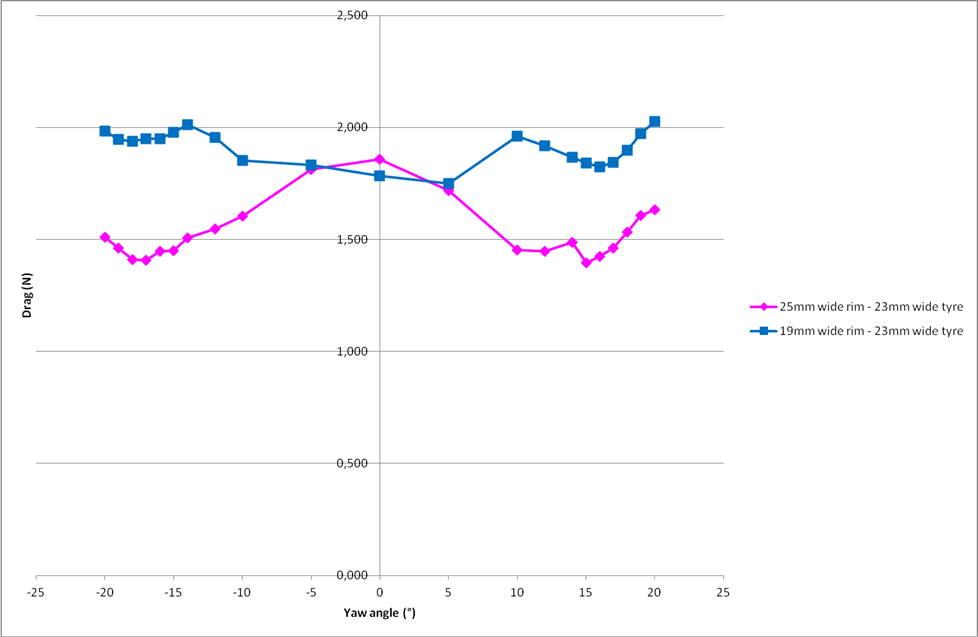
  • There is no point spending a fortune on aero wheels that have been tested to the nth degree in wind tunnels to then spoil it (litterally) by putting a spoiler on it. This is a point many overlook when looking at data in isolation (rolling resistance for example) but tgere is no point saving 2 watts rolling resistance with wider tyres to then loose huge yaw angle benefits on aero wheels. Both Zipp and Mavic have good articles on this, but for me the easiest and most succinct is this one from Mavic engineers blog point 3.3 half way down.
There is no point having expensive aero wings with a huge tyre messing up their flow: from Mavic 
Conversely however, there is also significant benefit of just wider rims with the same tyres, which gives more volume and if you read the link to the Mavic engineers blog, better aero also. For me, both from MTB and road experience, better handling is the biggest upside as the sidewall is properly supported at wider pressure variations. With the sidewall being more or less the same width or shallower than the rim rather than extending beyond the rim, it is my experience that you seem to have better aero at more angles, this is upheld by the Mavic link above, but also in the real world, the tyre handles better around corners and over poor road surfaces as it tracks surface imperfections better at wider pressures . I have tried varying rim widths and tyres and find, as a lot of the aero and rolling resistance data seems to err on the side of wider rims, tyres that do not buldge out wider than the rim. 
25c Continental GP4000s2 on Zipp 808 obscures the rim every so slightly, so 24mm s-works or 23c Conti likely more aero 
Here you can see a 23c Continental TT tyre being slightly narrower than the rim: great sidewall support and wind flow

Tubeless will get you home

Many Tubeless tyres have an extra layer of rubber / butyl and so are heavier to start and product managers skimp on puncture protection to balance the weight. That is generally not an issue as sealing holes in my experience is more effective than trying to stop them.

My favourite tyre / wheel combos

Standard road wheel tyre choice

My standard wheels are Mavic Kysirium SL (2009) and Mavic CX-22 (2011). The former has what Mavic calls "fore" drilling so has no spoke holes in the rim bed. This has a couple of benefits: 
  1. no need for a rim strip (except a light one if running tubeless makes it easier to clean and install fresh tyres) 
  2. Latex and thinner tubes last longer as they are exposed to less grime and/or water ingress. 
These wheels are the old school 13mm inner bead width so they generally wear: Continental GP4000s, Specialised Turbo S-works, Specialized / Schwalbe tubeless, all 23/24c. The first tubeless tyres shod on this bike were the hutchison atom / fusion / intensive combos, followed by the Schwalbe ultremos which were discontinued.
Hutchison atom (front only) fusion (front / rear) and intensive (rear only) are a solid road tubeless choice
At some point these will be upgraded with newer Mavics and or Fulcrum or American Classic wider rims, as the benefits of wider are clear to me! See this video if you are on the fence here:


Semi Aero road wheel tyre choice

My semi aero wheelset is the slightly wider Campagnolo Bora Ultra clincher. With 17mm inner bead I can run wider 25c tyres well, however I tend to just enjoy the same tyres as above, just with better grip. 
With tubes I tend to use latex tubes and conti GP4000s / conti TT, Specialized turbo s-works
Tubeless I have been using also the specialized sworks turbo tubeless, roubaix tubeless (training wet) and the discontinued ironman tubeless tyres.
road tubeless and semi aero go well together for a fast puncture proof combo. 
100 psi is the best grip resistance ratio for me on all these, but I weight around 80kg ...

Aero road wheels tyre choice

My aero wheelset is a Zipp 808 wheelset with a zipp 404 front for windier days. These are about as wide a rim brake wheels will go and will quite easily take 25mm tyres, however as you can see above the do stick out and so I only ever have these on the back. With inner tubes, my new favourite is the Continental TT tyre... wow that is a fast tyre. I also use the conti 4000s2, both with 23c front and generally a  23c or 25c on the back.
Continental GP4000s and s2 are possibly the most versatile road tyres out there.
Tubeless Zipp 808 and 404 is very easy as the link shows and tubeless I like the Schwalbe ironman 22c that was for some reason discontinued, the specialized turbo tubeless and about to be replaced with the Schwalbe pro one tubeless, however the schwalbe facebook page shows what looks like a pro one TT tyre coming 
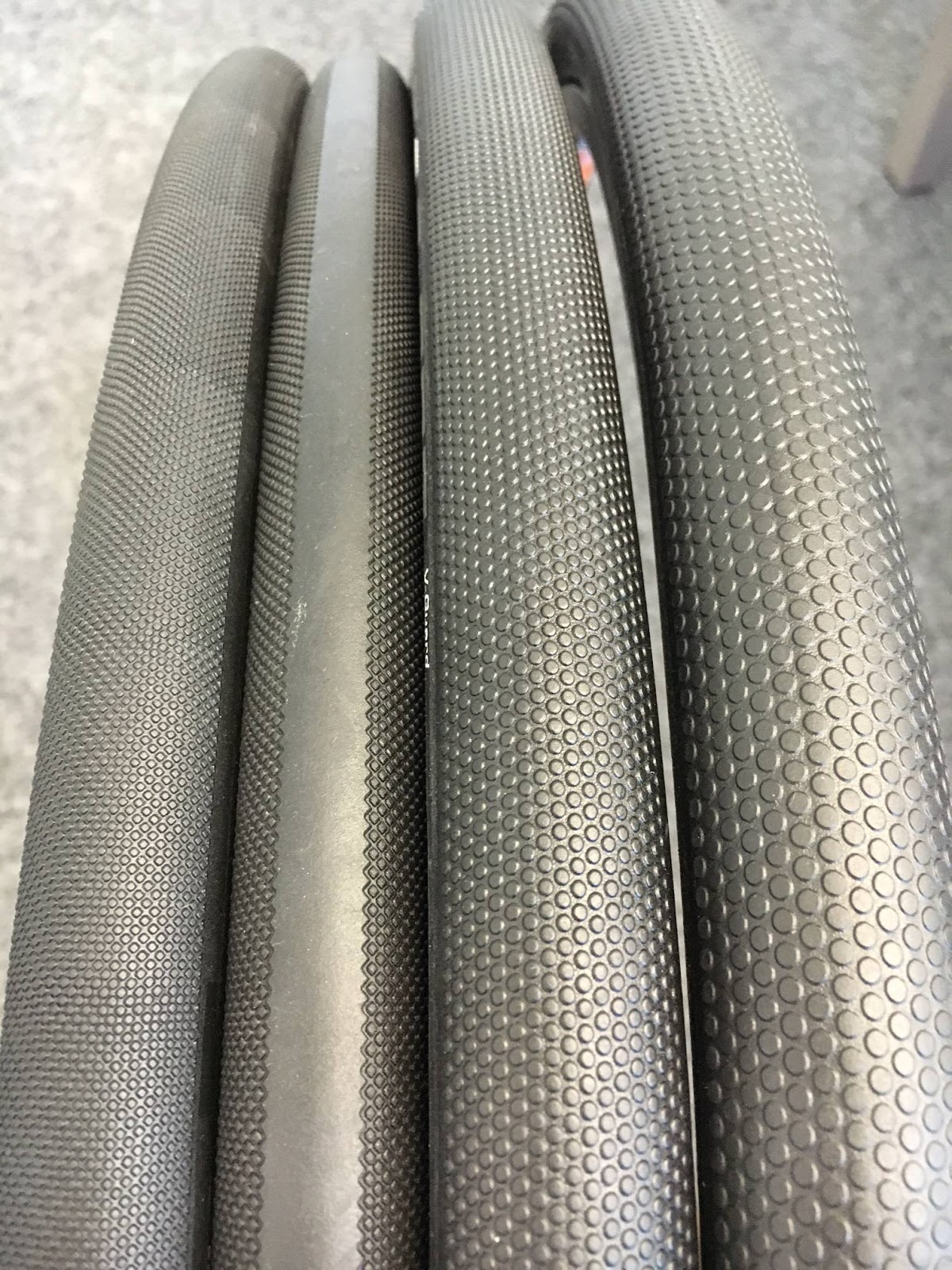
Schwalbe Pro One TT (second in from left) will be the TT tyre to beat in 2017, let's hope there is a tubeless and clincher

Tuesday, 26 March 2013

How ballots break great events - Hyde Park and London lose again...

As you get into triathlons, marathons, half marathons, etc. you get used to talking about your experience as the curious and would be athletes constantly ask about your experiences, training, and generally the process of getting into these sports...

... as this happens, and being a Londoner, you rapidly learn how lucky we are as Londoners in having Hyde Park, and other parks to train in. My friends who live in the country cannot train due to country lanes accessing open areas being dangerous, others live in cities that just do not have the parks we have in London.

However, aspiring sportsters very, very seldom do their first event alone, nor do they do it far from home. They do it with people who have done it before and they do it close to home and at key locations, like Hyde Park (and uniquely Blenheim Palace). This is where Hyde Park has been pivotal in getting myself and all the people I know who do triathlons and half marathons into these great sports that have changed peoples' lives and make London one of the best places in the world to live in. For me, the Hyde Park triathlon was the London 2012 legacy we heard so much about.

The key to these events changing peoples' lives, helping them live longer, stay fitter, being proud of their city and to keep doing these sports is not only that they get people into sports, but they keep them in these sports by creating a stable event around which to keep bringing people into these events. Yes, some go, but for each that goes, at least one new comes, and the one that goes often come back again.

The Hyde Park Triathlon is, or was, a "must do" event that we hyped up, got everybody to subscribe to, to the point that we all follow the event religiously as we did all the brands that sponsored these events: We checked the pages weekly, daily, even hourly and when the moment came, we acted; there was no room for doubt - you were in, and committed to doing the event as it became available - but moreover, we were "all in".

Hyde Park Triathlon was an olympic experiment that got many Londoners into triathlon
This "all in" is important, as we are in together, we train together, and so the event is a success. You cannot expect to sign up for your first triathlon or half marathon alone and expect it to be a success. Do it alone and the chances of it being an unmitigated disaster you tell all your friends never to do is almost guaranteed. Join or participate alone it will most likely be a one-off, like the London Marathon and like so many "bragging rights" events that people come to, they do and they leave with the t-shirt.

Marathons are different; a marathon is 3 or 4 times the distance most avid runners ever want to run and then some more...they are bragging events and so the ballot works: Ironman is the same.

Half marathons and triathlons however are different: We are all members of clubs, either registered clubs or social clubs of our own making via email and social networks - we train together year after year, we plan the following year together, we race together and we compare personal bests year after year together... Which bring others in.

That is until someone who has no interest in the sport, or just wants to exploit an event for short term gain, decides to turn marketing and sponsorship gold that is a whole city gripped for an events release into a mass market maybe in one foul swoop by putting a ballot in place. It happened to the Royal Parks half in 2011 and it happened now in 2013 to the Hyde Park Triathlon. In 2011 I know of spouses who got a place in the Royal Parks Half, but the person who got the spouse into half marathons did not. In the 2013 hyde park triathlon I know 30 people in 5 groups who entered but only one got in. None of us have returned to Royal Parks half and none of us, not even the one who got a ballot ticket for the Hyde Park Triathlon, want to do the event again while there is a Ballot.

While I am very happy for those who got a place, and want as many people who can and want to, to enjoy a great event and a location I am lucky enough to train in every day; the long-term value of an event is built on the fact that it grips its locals and continues to change lives and return sponsor value year after year, and carries on building the legacy of the people who built it and the Olympics that changed London. It also depends on the people who are dedicated enough to follow the event and its sponsors to be on top of the event, its sponsors, their social presence so keenly that the moment they announce entry they buy a ticket and email the people who they bring into the sport and will continue in, the sport. The legacy builds this way.

A ballot not only ruins this community spirit, but also ruins sponsorship value: the Hyde Park tri this year is sponsored by Pruhealth, my insurance provider of many years, and a provider I have introduced and convinced many to join over the years... Is now a sponsor and health insurance provider, like the event, that I now no longer not want to be associated with! In 2010 and 20111 we all came back from holiday to compete and in 2012 we did the same and even took days off while screamed ourselves hoarse at last year's event we could only watch (due to the Olympics) while discussing next year's come back. This year we are unlikely to even turn up, even the one who got a ballot ticket, such is the disconnect a ballot causes.

At the same time, my loyalty to last year's sponsors; Garmin, Tata and Specialized, could not be stronger, and if they sponsor a rival event; I and my training partners will most likely follow wherever they go. And at least there is still the Blenheim Triathlon, which despite being just a sprint continues to grow from strength to strength, like the legacy of the of the man who was born there.

Organisers of events take note - the people who build your event are those who will maintain your event and its ability to continue to attract bigger and stronger sponsors, who in turn will attract more dedicated following and with it more tourism, bigger crowds and new entrants alongside loyal followers and the long term chance of your event going from a "must do" to a legendary fixture. Put in a ballot an you turn it into an x-factor that churns out one hit wonders and attracts second tier follower brand sponsors instead of market leaders... This is not the legacy London 2012 was supposed to create, and it should not be allowed to repeat itself.

Thursday, 23 February 2012

Triathlon post

I am finally updating the guide for rational people to triathlon for those (ever more) people looking to this as a way to get both the discipline and the reward to get properly fit in a very rounded manner again (swim, bike, run works pretty much all the major muscle sets). It also pays off in your professional and personal life, as long as you get the balance right.

read more here: http://www.christianborrman.com/p/triathlon.html